
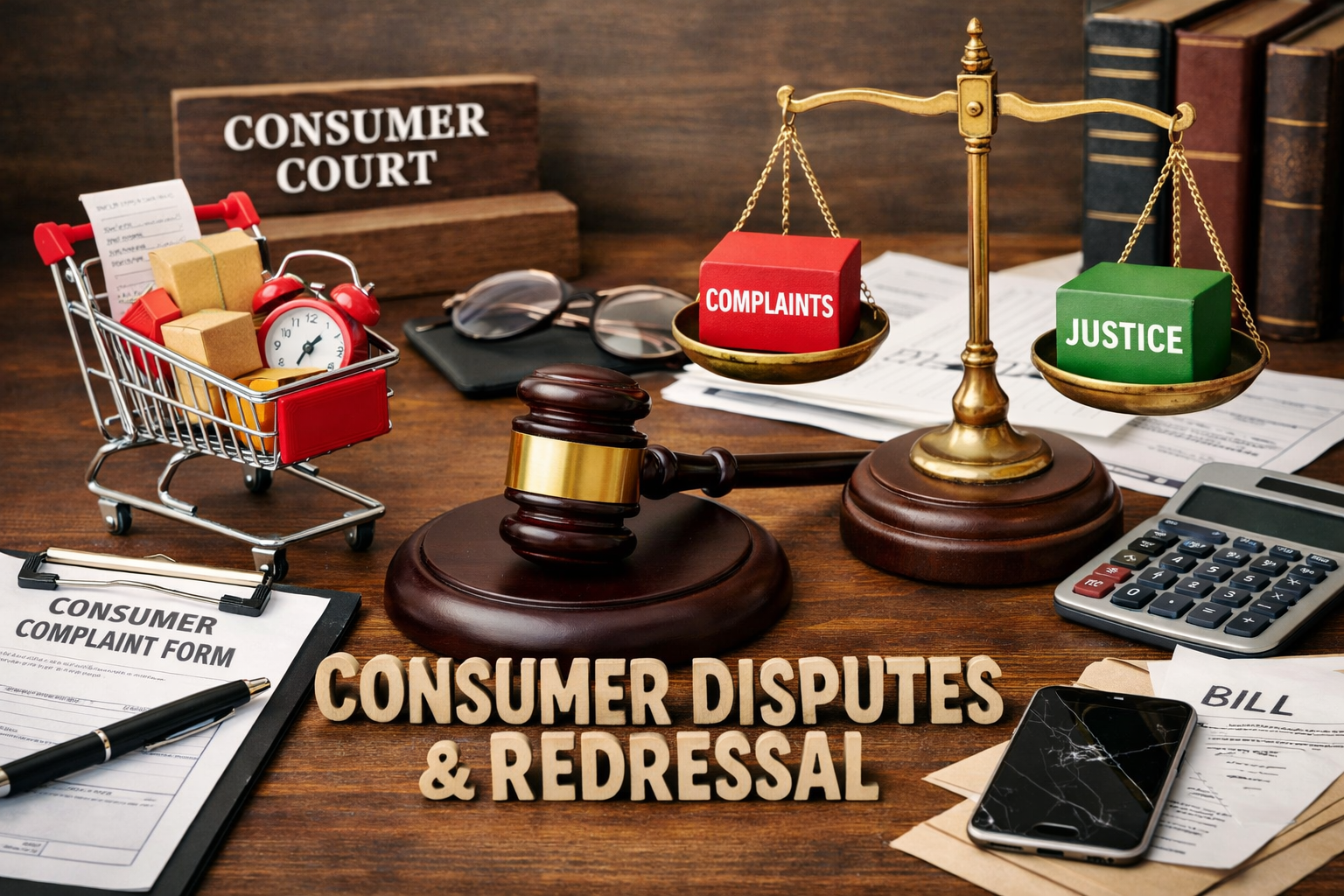
Consumer Disputes & Redressal: Safeguarding Buyer Rights
In today’s fast-paced marketplace, consumers frequently face issues such as defective products, deficient services, unfair trade practices, misleading advertisements, and delayed deliveries. To protect buyers from such exploitation, the Indian legal system has established a robust Consumer Dispute Redressal mechanism aimed at ensuring fairness, accountability, and justice.
The Consumer Protection Act, 2019 empowers consumers with enforceable rights, including the right to be informed, the right to choose, the right to seek redressal, and the right to be heard. Under this framework, consumer disputes can be addressed through a three-tier redressal system comprising the District Commission, State Commission, and National Commission, depending on the value of the claim.
Consumer disputes may arise against manufacturers, sellers, service providers, e-commerce platforms, banks, insurers, builders, hospitals, or telecom companies. Importantly, the law emphasizes speedy and cost-effective resolution, allowing consumers to file complaints without complex procedures. With the introduction of e-filing and mediation, access to justice has become more efficient and consumer-friendly.
Legal assistance plays a crucial role in navigating consumer disputes effectively. A well-drafted complaint, supported by evidence and proper legal representation, significantly improves the chances of successful redressal. Remedies may include replacement, refund, compensation for loss or harassment, discontinuation of unfair practices, or penalties against the opposite party.
Consumer dispute redressal not only protects individual buyers but also promotes ethical business practices. By asserting their rights, consumers contribute to a fair, transparent, and accountable marketplace.